



Fragrance 101: Essential Oil vs Natural Fragrance vs Synthetic Fragrance

Understanding the Real Differences — and Why Formulation Matters More Than Labels
If you’ve ever turned over a lotion or body wash and paused at the word fragrance, you’re not alone. Terms like essential oil, natural fragrance, and synthetic fragrance are often presented as opposites — as if one is automatically better than the others.
In reality, fragrance in body care is more nuanced.
“Natural” does not automatically mean gentler.
“Synthetic” does not automatically mean harsh.
And the word “fragrance” on a label rarely tells the full story.
What matters most is how a fragrance is formulated, how it performs in a finished product, and how responsibly its ingredients are selected.
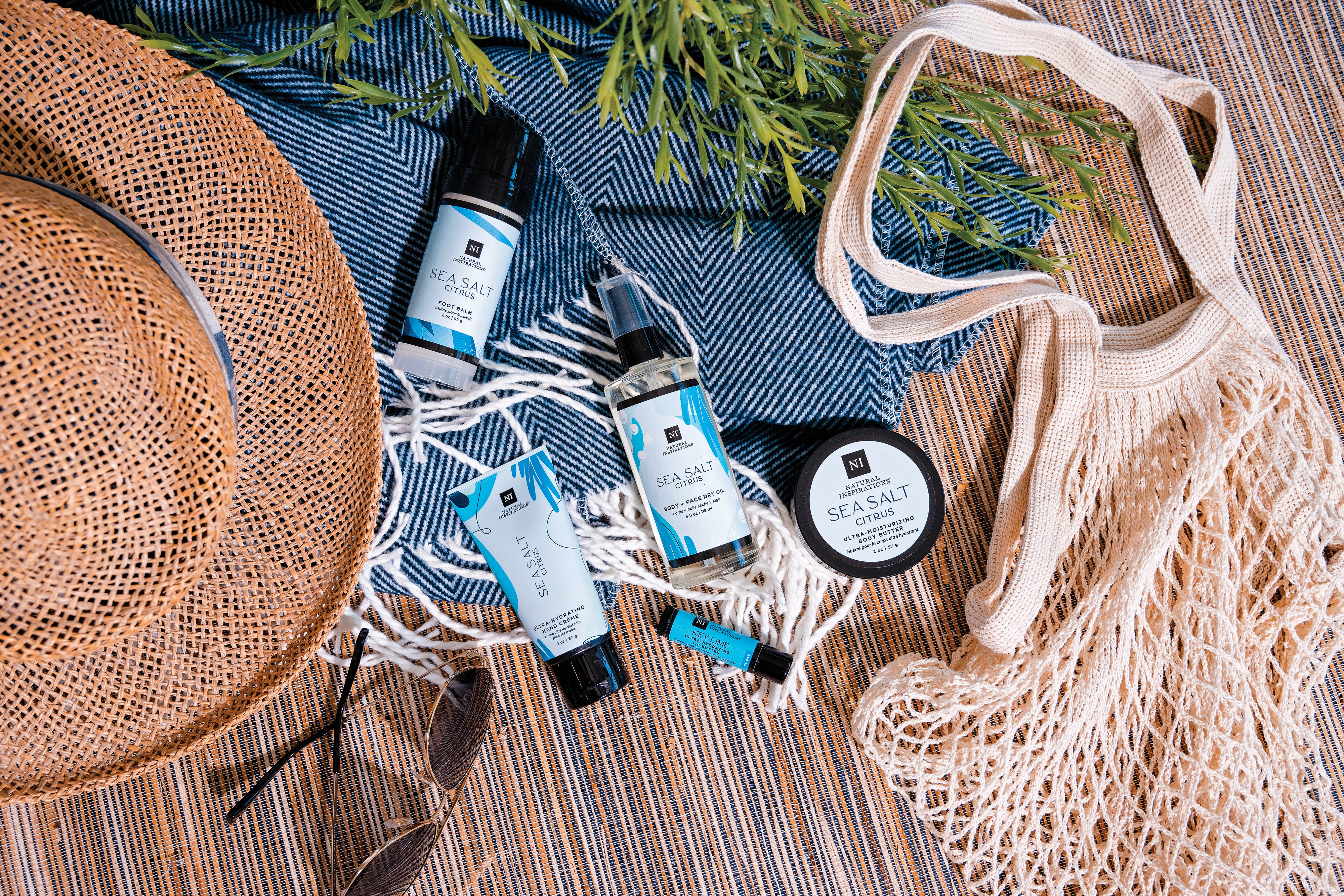
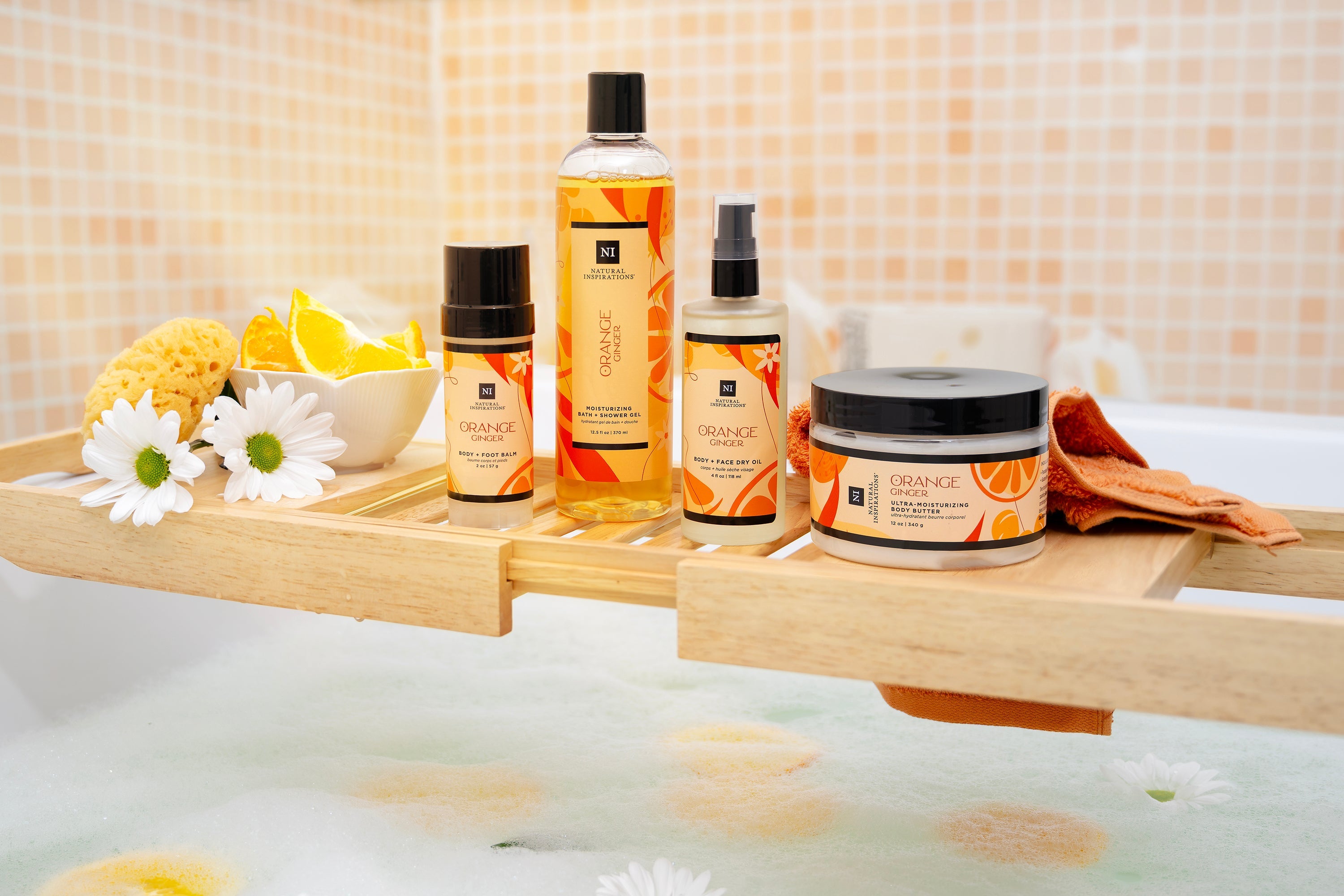
At Natural Inspirations, our fragrances are designed to be light, clean, and fresh — never
overpowering. We use a thoughtful balance of essential oils and phthalate-free synthetic
fragrance ingredients to create spa-grade scents that perform beautifully in real-world body care.
Let’s break down what these terms actually mean.
How Fragrance Is Regulated in Cosmetics
In the United States, cosmetic manufacturers are responsible for ensuring their products are safe for intended use. The FDA explains that fragrance ingredients are not individually pre-approved before sale, but companies must ensure product safety and proper labeling.
FDA overview.
Fragrance blends are typically listed simply as “fragrance” or “parfum” to protect proprietary formulas.
Globally, fragrance safety standards are informed by the International Fragrance Association (IFRA) and scientific research conducted by the Institute for Fragrance Materials (RIFM).
IFRA Safe Use Fragrance Science.
RIFM Safety Assessment Program.
Fragrance safety is about ingredient choice, concentration, and exposure — not marketing language.
Fragrance is a Blend—Not a Single Ingredient
In body care, fragrance is rarely one ingredient. It is a carefully constructed blend designed to:
- Smell balanced and refined
- Remain stable in lotions and washes
- Perform consistently from batch to batch
- Hold up over time
That’s why reducing fragrance to “natural vs. synthetic” oversimplifies what actually
determines performance and skin compatibility.

What Is Essential Oil Fragrance?
Essential oils are concentrated aromatic extracts from plants such as lavender, citrus,
peppermint, and eucalyptus.
Why essential oils are appealing
- Botanical complexity
- Natural scent variation
- Strong plant-based identity
However, essential oils are chemically active. Dermatology research consistently identifies fragrance ingredients — including naturally occurring ones — as common causes of allergic contact dermatitis.
Review article:
Recent research explains that compounds like linalool and limonene (common in essential oils) can oxidize when exposed to air and form hydroperoxides associated with increased
sensitization risk.
Additional research on Fragrance Contact Allergy – A Review Focusing on Patch Testing
Additional research on What is New in Contact Allergy To Cosmetics for Physicians, Cosmetologists, and Cosmetic Users?
Essential oils are not inherently unsafe. They simply require thoughtful formulation and
controlled usage levels.
Natural does not automatically mean gentler.
What Does “Natural Fragrance” Mean?
“Natural fragrance” is a marketing term, not a strictly regulated classification in U.S. cosmetics.
It typically refers to blends composed primarily of:
- Essential oils
- Plant-derived aromatic isolates
- Botanical extracts
However, the term does not guarantee:
- Lower allergen potential
- Greater transparency
- Improved stability
- Reduced irritation risk
Even natural fragrance blends are usually listed simply as “fragrance” on labels.
The key question is not whether a fragrance is natural.
It’s whether it is thoughtfully formulated.
What Is Synthetic Fragrance?
Synthetic fragrance ingredients are aroma molecules created through chemical synthesis or designed to replicate molecules found in nature.
“Synthetic” describes how an ingredient is made — not whether it is safe.
Many fragrance materials are evaluated within structured safety frameworks. IFRA outlines exposure-based usage standards here.
RIFM details toxicological evaluation processes here.
Why synthetics are important in body care
Consistency
Botanical ingredients vary by harvest conditions. Synthetic components help maintain scent consistency.
Stability
Water-based formulas can destabilize certain natural components. Synthetics often improve longevity and clarity.
Precision
Synthetics allow perfumers to design scent profiles without overusing specific naturally
occurring sensitizers.
Sustainability
Some synthetic materials reduce reliance on slow-growing botanicals.
Synthetic fragrance ingredients are formulation tools. Their impact depends on how they are used.
Why Natural Inspirations Uses a Balanced Approach
Our goal is fragrance that performs beautifully in real-world body care — not just on a scent strip.
To achieve scents that are consistently light, clean, and fresh, a balanced blend of essential oils and synthetic components often performs better than either alone.
This approach allows us to:
- Maintain stability in lotions and washes
- Ensure batch-to-batch consistency
- Avoid excessive levels of certain botanical components
- Create refined, wearable scent profiles
- Balance leads to better performance.
Why We Formulate Phthalate-Free Fragrance
Some fragrance blends historically used a phthalate called diethyl phthalate (DEP) as a solvent to help disperse scent ingredients.
Broader research has raised questions about certain phthalates as a chemical class, particularly regarding endocrine activity and cumulative exposure from multiple sources.
Consumer advocacy organizations such as the Environmental Working Group note that DEP may be part of fragrance blends and not listed separately.
While DEP remains permitted in U.S. cosmetics and is considered less potent than some other phthalates, many consumers prefer to limit avoidable exposure when alternatives exist.
At Natural Inspirations, all of our fragrances are phthalate-free because:
- Effective alternatives are available
- Many customers prefer to avoid phthalates
- It aligns with our formulation philosophy
This is a formulation decision — not a fear-based one.

Fragrance and Sensitive Skin
Fragrance sensitivity varies from person to person. Dermatology research continues to identify fragrance as a common contributor to contact dermatitis in susceptible individuals.
Sensitivity can occur with both natural and synthetic ingredients.
If you have sensitive skin:
- Patch test new products
- Choose lighter fragrance levels
- Avoid applying fragranced products to compromised skin
Our fragrance design philosophy — light, clean, fresh — supports comfort and everyday
wearability.
Essential Oil vs. Natural vs. Synthetic: A Practical Comparison
| Type | Strengths | Considerations |
| Essential Oils | Botanical complexity | Chemically active; may oxidize |
| Natural Fragrance | Plant-derived blends | Broad term; varies widely |
| Synthetic Fragrance | Stability, precision, consistency | Requires thoughtful formulation |
The most effective body care fragrances often combine elements of more than one category.
A Balanced, Informed Approach to Fragrance
Fragrance does not fit neatly into marketing extremes.
Essential oils offer botanical beauty but are chemically complex.
Synthetic ingredients offer stability and precision but must be used responsibly.
What ultimately matters is:
- Ingredient selection
- Concentration
- Safety evaluation
- Formulation expertise
At Natural Inspirations, we create fragrances that are:
- Light
- Clean
- Fresh
- Phthalate-free
- Thoughtfully formulated
By blending essential oils with carefully selected synthetic fragrance ingredients, we deliver beautiful, spa-grade scents that remain refined, stable, and wearable.
Our philosophy remains consistent:
Indulge in the good. Eliminate the bad.
Fragrance should elevate your daily ritual — not complicate it. With informed choices and
balanced formulation, it can do exactly that.
Fragrance FAQ
Is synthetic fragrance safe in body care?
Synthetic fragrance ingredients are widely used in cosmetics and are evaluated within
established safety frameworks. In the U.S., manufacturers are responsible for ensuring safety under the oversight of the FDA. Safety depends on formulation, concentration, and responsible use — not whether an ingredient is synthetic.
Are essential oils safer than synthetic fragrance?
Not automatically. Essential oils are natural plant extracts, but they contain chemically active components that can trigger sensitivity in some individuals. Research shows certain oxidized fragrance compounds, including linalool and limonene, are common allergens. Safety depends on formulation and skin response — not ingredient origin.
What does “natural fragrance” mean on a label?
In U.S. cosmetics, “natural fragrance” does not have a strict legal definition. It typically refers to plant-derived aromatic ingredients such as essential oils or natural isolates. The term describes sourcing, but it does not guarantee lower irritation risk or full disclosure of individual components.
What does phthalate-free fragrance mean?
Phthalate-free fragrance means the formulation does not contain phthalates such as diethyl phthalate (DEP), which have historically been used as fragrance solvents. Although DEP remains permitted in U.S. cosmetics, many brands choose alternatives to reduce avoidable exposure and align with consumer preferences.
Can fragrance cause skin irritation?
Yes. Fragrance can cause irritation or allergic contact dermatitis in susceptible individuals. This can occur with both natural and synthetic ingredients. Risk depends on concentration, skin condition, and individual sensitivity. Patch testing is recommended for those with reactive skin.
Why does Natural Inspirations use both essential oils and synthetic fragrance?
Combining essential oils with carefully selected synthetic ingredients improves stability,
consistency, and scent refinement. This balanced approach allows us to create fragrances that are light, clean, fresh, and wearable — without relying heavily on any single component category.
Is fragrance-free better for sensitive skin?
For individuals with diagnosed fragrance allergy, fragrance-free products may be advisable. However, many people tolerate moderate, well-formulated fragrance. Choosing lighter fragrance levels and patch testing new products can reduce irritation risk.